


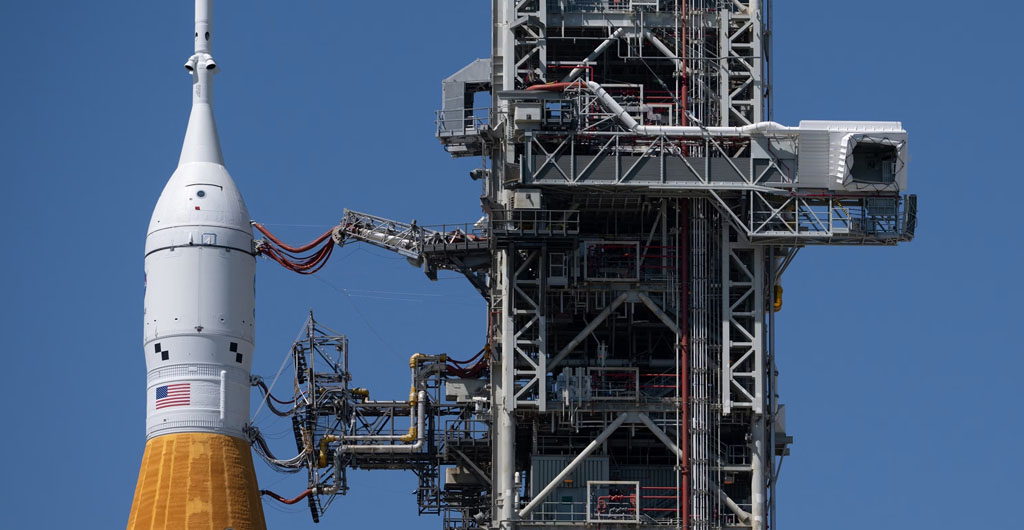
NASA prepares for landmark crewed lunar mission after five decades
The lunar market for businesses
NASA is working with a number of companies on its moon program in the hopes of creating a commercial lunar market in the future. Analysts say it’s hard to determine how much that market will be worth.
Boeing and Northrop Grumman are in charge of SLS, and Lockheed Martin makes Orion for NASA. NASA is paying SpaceX and Blue Origin to build their own landers, but the contracts let them sell the spacecraft to other clients.
A PricewaterhouseCoopers analysis from January estimates that lunar surface operations could generate $127 billion in revenue by 2050, with investments potentially reaching $72 billion to $88 billion over the same period.
For today and in the near future, governments will be in charge of companies’ lunar plans and profits. Akhil Rao, an economist with the analysis firm Rational Futures and a former research economist at NASA, stated that it will be a long time before critical infrastructure, such as energy and communications systems, is developed enough for businesses to grow on the moon without government funding.
Rao was one of the NASA economists and space policy professionals who lost their jobs last year when the Trump administration made big cuts to the federal workforce. He said he doesn’t see a short-term economic value that corporations might get that would let NASA stay out of it.
The Artemis II mission will be a bigger test for NASA’s Orion capsule and SLS than the uncrewed mission they did in 2022. The astronauts on board will test important systems for life support, crew interfaces, navigation, and communication.
The launch is set for April 1, but it might happen any day after that, up to April 6, depending on the weather in Florida and any last-minute problems with the rocket. After that, another launch window opens on April 30. This one is mostly based on how the Earth and the moon move in space.
In 2027, Artemis III will send the Orion capsule to dock in Earth’s orbit with NASA’s two lunar landers: Jeff Bezos’ Blue Origin’s Blue Moon system and Elon Musk’s SpaceX’s Starship. The meticulous tag-up will show how the landers would pick up humans and then go to the moon’s surface.
NASA’s new administrator, Jared Isaacman, a billionaire private astronaut, added that mission to the program in February. He has also made big changes to the program by setting new goals. Because of his choice, the program’s first crewed lunar landing was moved to Artemis IV.