


Changing the way wars are fought: drones and new military techniques
Let’s talk about how the rise of cheap combat drones transformed the way wars are fought and how much they cost.
Drones, which are unmanned aerial vehicles that a person can operate to hit specific targets with more accuracy, have revolutionised the way wars are fought.
It would be interesting to talk about how the rise of cheap combat drones has transformed the character and cost of war, especially as the US, Israel, and Iran are all using them in their fight against each other.
What drones are
Drones are basically flying things that an operator may control from a distance in real time. They come in two types: civilian and combat. Each type has its own set of rules about how to utilise it.
Civilian drones, like those used for aerial photography or racing, are designed to be lighter and cheaper to build and repair than military drones.
Drones made for war, or unmanned combat aerial vehicles (UCAVs), can cost tens of thousands of dollars to produce, but they are still cheaper to build and operate than fighter jets and the weapons that accompany them.
What has changed in the way the military plans?
Building a large number of combat drones, or “amassing drones,” is a good strategy for a government to fight a war because it does two things at once.
First, it transforms the way wars are fought by making the technology disposable, which lowers the risk to soldiers. More crucially, it affects the economics of battle, so defending against a single drone costs more than defending against an entire fleet. This makes wars of attrition, where the goal is to slowly wear out your opponent, a good strategy.
The idea of fighting a war of attrition is still continuing in the Russia-Ukraine conflict, and it is often seen as a turning point for the use of drones.
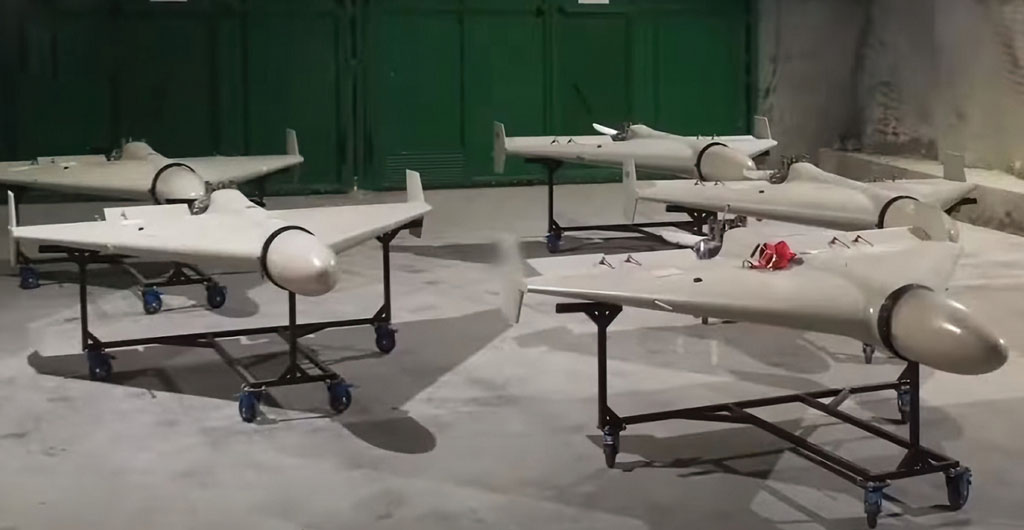
In a report from November 2025, the Center for European Policy Analysis said that Ukraine employed drones very well by “fielding mass quantities of low-cost First-Person View (FPV) drones for frontline and deep-strike operations.” Russia’s response was to make drone use a regular part of its war effort. Iran’s Shahed drones have become a frequent example of what a combat drone should look like. Because they are cheap, they can be manufactured to fit the needs of a battle. They can also be used as a suicide drone, which is a flying bomb that people control, for one-time missions.
For instance, the Shahed 136 drone is thought to cost around $35,000 per unit, but the missiles needed to fight it would cost at least $1 million. This makes it cheaper to assemble a fleet of suicide drones, at least in terms of cost and the harm they could do.
On March 1, the US Central Command reported that its strikes against Iran as part of Operation Epic Fury used LUCAS drones, which are based on Iran’s Shahed drones.